
Informal Housing Thermal Comfort Project
Informal Housing Thermal Comfort Project – Roofing Solutions for Heat Reduction
Pune Municipal Corporation (PMC), Maharashtra (2024)
Maharashtra Social Housing and Action League (MASHAL) implemented the Informal Housing Thermal Comfort Project – Roofing Solutions for Heat Reduction as a pilot initiative aimed at improving living conditions in informal settlements by addressing the growing challenge of extreme urban heat. The project focused on developing, testing, and demonstrating innovative and affordable roofing solutions capable of reducing indoor temperatures and enhancing thermal comfort for residents living in vulnerable housing conditions within Pune Municipal Corporation (PMC) limits.
The initiative was conceived in response to increasing heat stress experienced by households residing in informal settlements, where conventional roofing materials such as tin sheets, asbestos sheets, and metal roofs often absorb and retain excessive heat, resulting in unhealthy indoor environments. The project sought to identify practical, affordable, and climate-resilient solutions that could be adopted by low-income communities to improve their quality of life and resilience to rising temperatures.
Project Background
Rapid urbanization and climate change have significantly increased heat exposure in informal settlements across urban areas. Many low-income households live in structures constructed using materials that offer limited thermal insulation, resulting in elevated indoor temperatures during summer months. Prolonged exposure to heat can adversely affect health, productivity, and overall well-being, particularly among children, women, elderly persons, and individuals with existing health conditions.
Recognizing these challenges, MASHAL initiated a pilot project to explore innovative roofing technologies and passive cooling mechanisms that could be adapted to informal housing contexts. The project combined technical innovation, community participation, academic engagement, and practical field testing to identify solutions suitable for large-scale replication.
Project Objectives
The project was implemented with the following objectives:
- To improve thermal comfort within informal housing through innovative roofing interventions.
- To reduce heat absorption and indoor temperatures in low-income settlements.
- To identify affordable and scalable climate-resilient housing solutions.
- To engage communities in the co-creation and testing of thermal comfort technologies.
- To generate evidence for future large-scale implementation of heat mitigation measures in informal settlements.
- To strengthen community resilience to climate-related heat stress.
Need Assessment and Community Engagement
MASHAL conducted a comprehensive need assessment in selected informal settlements within PMC limits to understand the thermal comfort challenges faced by residents. The assessment included:
- Household surveys.
- Site inspections and housing condition assessments.
- Focus group discussions.
- Community consultations.
- Stakeholder interactions.
- Analysis of roofing materials and housing typologies.
The assessment helped identify key factors influencing thermal discomfort, including roof materials, housing density, ventilation conditions, socio-economic factors, and residents’ perceptions of heat-related challenges.
Participatory Design and Prototype Development
The project adopted a multidisciplinary and participatory approach involving:
- Community residents.
- Architects and planners.
- Engineers.
- Academic institutions.
- Fabricators and installers.
- Housing and built-environment professionals.
The intervention was implemented through a co-creation process comprising prototype design, community feedback, testing, and design refinement. Residents actively participated in identifying challenges, evaluating proposed solutions, and providing feedback on prototype performance.
Innovative Roofing Solutions Tested
As part of the pilot initiative, MASHAL experimented with several low-cost thermal comfort solutions designed specifically for informal housing conditions.
Ecoboard Systems
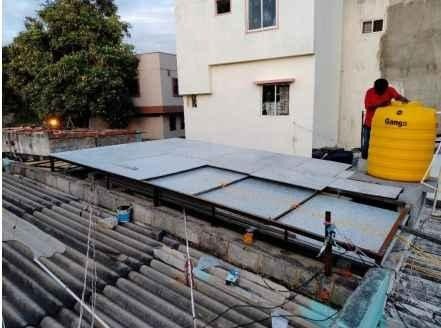
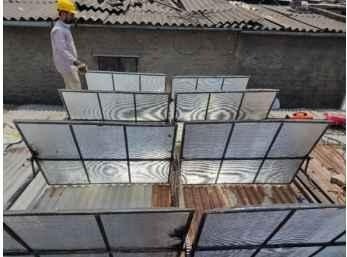
Ecoboards manufactured from recycled multilayer plastic waste and tetra-pack materials were tested as roofing insulation systems. Different operational mechanisms, including sliding and chain-sprocket systems, were developed to improve heat reduction while allowing night-time cooling.
Reflective Alufoil Insulation
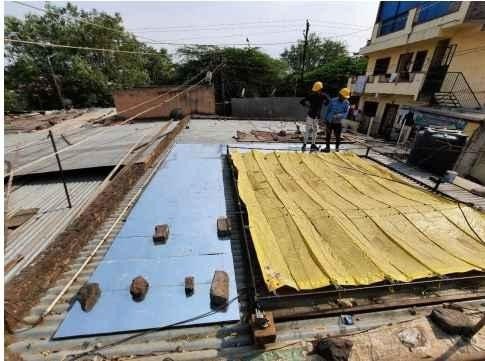
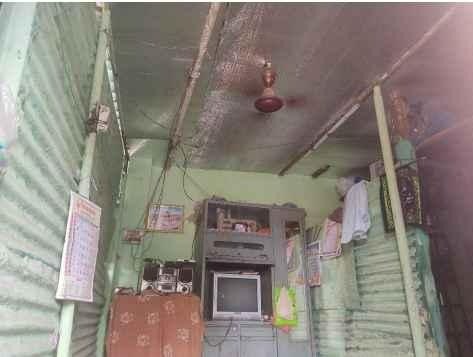
Cross-linked polyethylene foam with reflective aluminium coating was installed to reduce heat transfer through roofs. Multiple installation mechanisms, including static, sliding, chain-sprocket, and motorized systems, were tested to optimize thermal performance and usability.
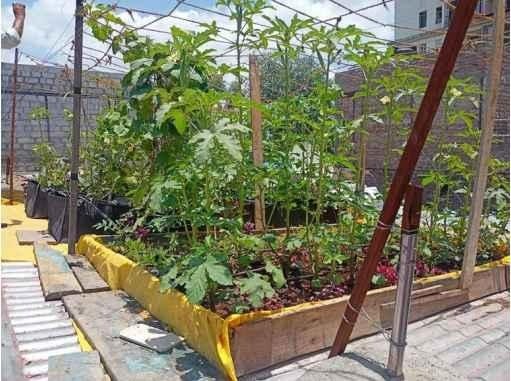
Rooftop Gardening
Vegetation-based cooling systems were introduced using wooden frames and grow bags installed on rooftops. These systems provided shading, increased thermal mass, and contributed to cooling while also creating opportunities for small-scale food cultivation.
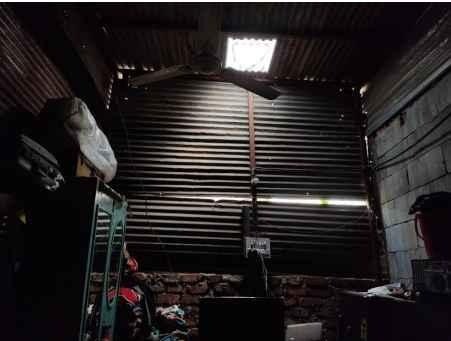
Dormer Ventilation Windows
Specially designed dormer windows were retrofitted onto corrugated roofs to improve natural ventilation. The system enabled warm air to escape through convection, thereby improving indoor comfort levels.
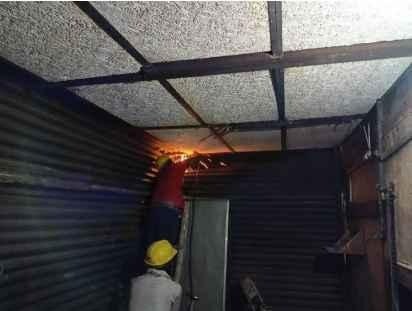
Wood Wool Panels
Environmentally friendly wood wool panels made from wood fibres, cement, and water were installed beneath roofs to provide thermal insulation and improve indoor comfort.
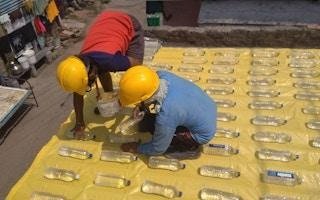
Water-Filled PET Bottle Systems
An innovative low-cost cooling solution utilizing recycled PET bottles filled with water was tested. The system leveraged water’s high heat storage capacity to reduce heat transfer through roofing surfaces and stabilize indoor temperatures.
Research, Monitoring and Evaluation
MASHAL undertook continuous monitoring and evaluation throughout the pilot phase to assess:
- Temperature reduction achieved by each solution.
- User acceptance and satisfaction.
- Cost-effectiveness.
- Ease of installation and maintenance.
- Potential for scaling and replication.
The project generated valuable insights into the effectiveness of passive cooling technologies for low-income housing and contributed to evidence-based approaches for climate-responsive housing improvement.
Outcomes and Impact
The pilot project demonstrated the feasibility of implementing affordable thermal comfort solutions in informal settlements. Key outcomes included:
- Improved awareness regarding heat-related risks and mitigation measures.
- Demonstration of innovative roofing technologies suitable for informal housing.
- Increased community participation in climate adaptation initiatives.
- Enhanced understanding of passive cooling techniques.
- Development of scalable models for future interventions.
- Strengthened collaboration between communities, technical experts, academic institutions, and development practitioners.
The project also highlighted the potential of integrating climate resilience measures into housing improvement programmes targeting vulnerable urban populations.
Project Significance
The Informal Housing Thermal Comfort Project established an important model for climate-responsive housing interventions in urban informal settlements. By combining community participation, technical innovation, sustainable materials, and practical field testing, the project demonstrated how affordable solutions can improve living conditions while addressing the growing impacts of climate change.
The lessons and findings from the pilot have contributed to MASHAL’s ongoing efforts in sustainable housing, climate adaptation, urban resilience, and community-led development, providing a foundation for future large-scale thermal comfort and housing improvement programmes in vulnerable urban communities.